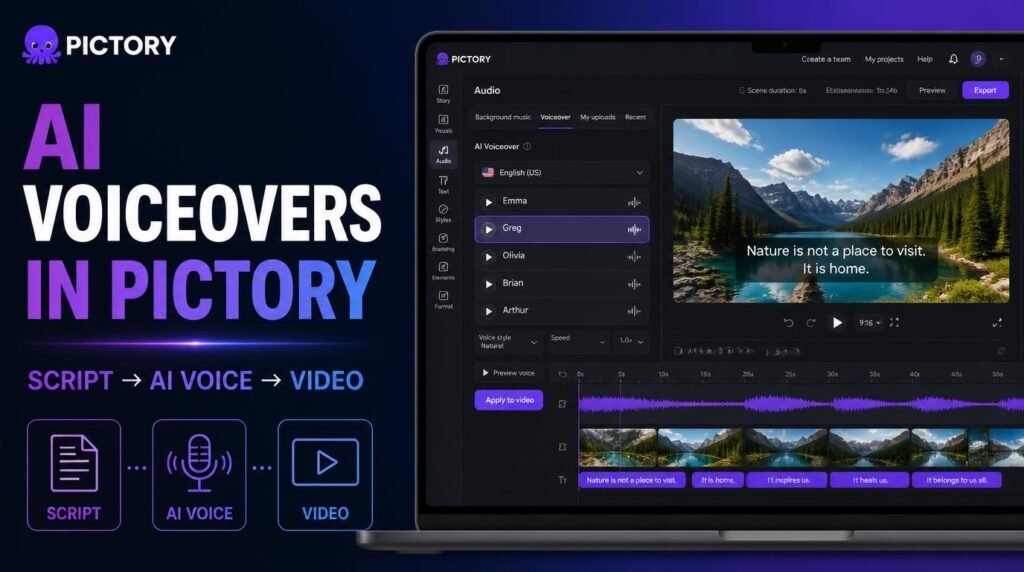
AI voiceovers have become a practical part of modern video production. What used to require a microphone, a quiet room, and multiple takes can now be generated directly from your script — and for a lot of content, that’s genuinely enough.
Pictory can combine written content, visuals, captions, and AI narration into one workflow, removing one of the more time-consuming steps in traditional video production.
H2: Where AI Voiceovers Fit Best
AI narration isn’t meant to replace every use of your own voice — but it’s particularly useful for specific types of content:
Faceless videos, where narration and visuals carry the video instead of an on-camera presence
Educational content, where clarity matters more than personal vocal branding
Tutorials, where consistent pacing and tone matter across multiple videos
Content repurposing, where you’re turning existing text into video quickly and don’t want recording to become a bottleneck.
What AI Voiceovers Actually Solve
The traditional recording process involves more than just speaking into a microphone. It means finding a quiet space, doing multiple takes, editing out mistakes, and re-recording when the script changes.
AI voiceovers remove most of that friction – you write or revise the script, and the narration updates with it.
When Your Own Voice Still Makes Sense
There are situations where recording yourself is still the better choice:
Personal brand content, where your actual voice builds a specific, recognizable connection with your audience
Content requiring emotional nuance that AI voices may not fully capture
Trust-dependent content, like testimonials or personal recommendations.
The Goal Isn’t to Replace Good Content
It’s worth being clear about what AI narration is actually for. The goal isn’t to replace thoughtful content with generic-sounding videos — it’s to remove some of the production friction that stands between a finished script and a finished video.
A script still needs to be clear, well-structured, and written with the audience in mind. AI voiceover speeds up production; it doesn’t replace the thinking that makes a video worth watching.
Final Thoughts
If recording your own voice for every video has been slowing down your publishing schedule, AI voiceovers are worth testing – especially for faceless content, tutorials, and repurposed written material. The goal isn’t fewer good videos with real narration; it’s more consistent output without recording becoming the bottleneck.
Disclosure: This article contains an affiliate link. If you sign up through it, AyaTools may earn a commission at no extra cost to you.